
France, Italy and Spain are the three classic countries for a destination wedding in Europe, and each has its own kind of venue: the French château, the Italian villa and the Spanish finca. They differ in more than style. The rules for the legal ceremony in particular can point you towards one country or another.
The three countries at a glance
| France | Italy | Spain | |
|---|---|---|---|
| Typical venues | Château, domaine, manoir | Villa, borgo, masseria, castello | Finca, masia, hacienda, island estate |
| Legal ceremony for couples from abroad | Difficult: only at the town hall or another municipal building, in a commune where one of you (or a parent) lives | Possible: a declaration at the town hall, with the right documents | Difficult: one partner must live in Spain or be a Spanish national |
| Standard VAT | 20% | 22% | 21% |
France: the château weekend
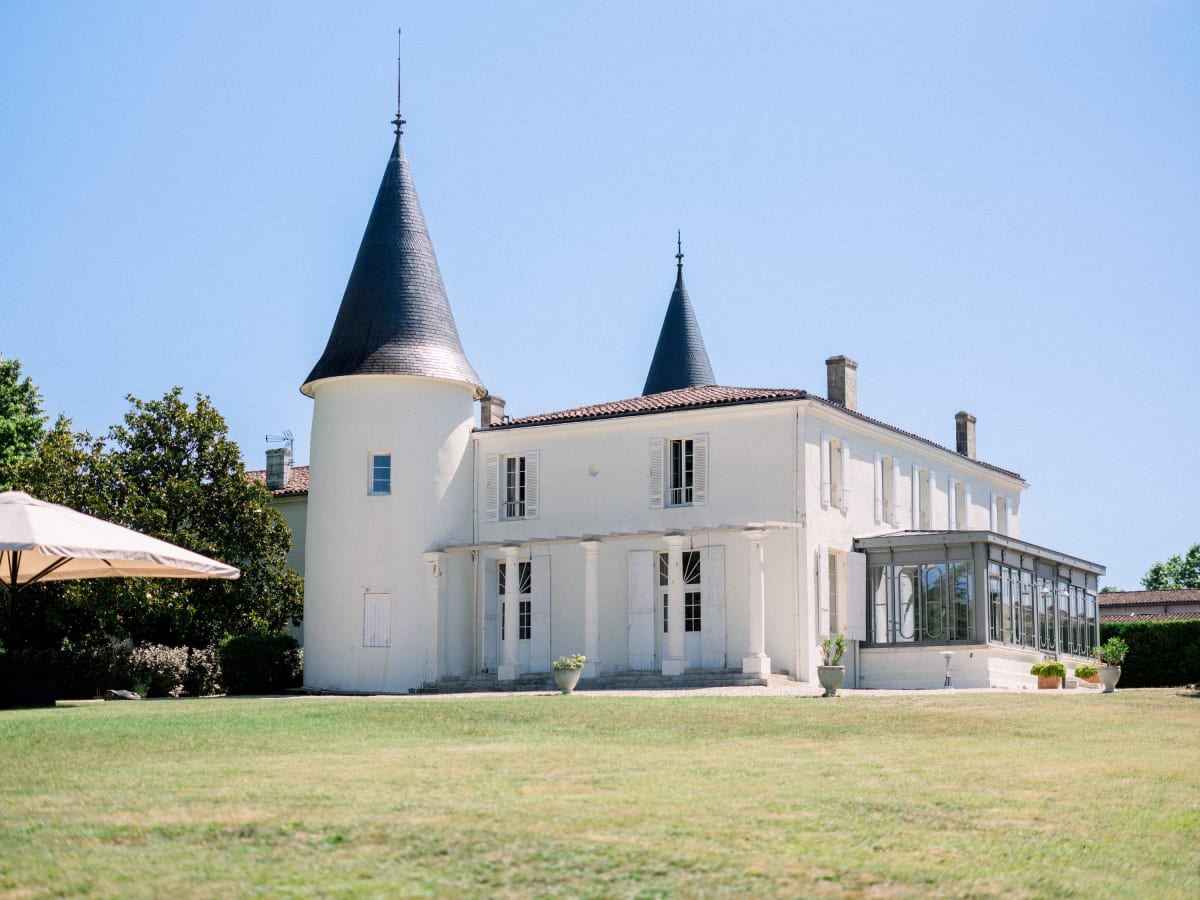
A French château wedding is often a weekend at a private estate, with rooms for the closest guests, a reception room or barn, and gardens for the ceremony and drinks. Catering arrangements vary: some châteaux let you bring your own caterer, others work with partner chefs or their own kitchen.
The legal side: a civil wedding in France must take place at the town hall, or another municipal building, in a commune where one of you (or a parent) has a home or has lived continuously for at least a month. A religious ceremony may not take place before the civil marriage (Direction de l’information légale et administrative, 2026). In practice, many couples from abroad marry legally at home and hold a symbolic ceremony at the château.
Best for: couples who want a classic, romantic setting and a whole estate for the weekend.
Châteaux to explore
- Château de Sentoutnear Bordeaux
- Château du RonchayNormandy
- Château de la BourdaisièreLoire Valley
See all wedding venues in France.
Italy: the villa, borgo or masseria
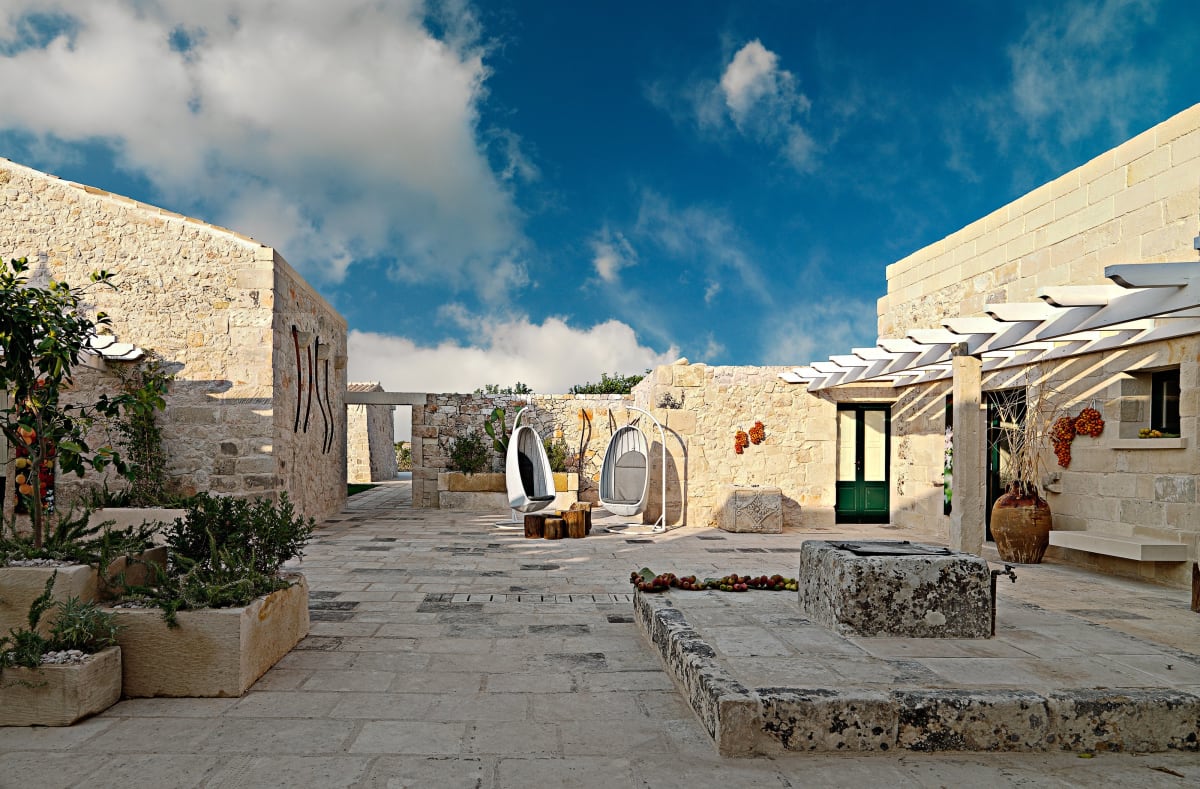
Italy has a wide range of venue types: Renaissance villas in Tuscany, restored hamlets (borghi), farmhouse estates (masserie) in Puglia, castles and palazzi on the coast. Pricing varies too: some venues quote per guest or with the menu, others offer multi-night stays with rooms. Many have their own kitchen or a catering partner, so ask early whether you can choose your own.
The legal side: the most straightforward of the three. US citizens, for example, can marry by making a declaration of intent at the town hall where the wedding will take place, with two witnesses and the required documents, and the banns are usually waived when neither partner is Italian or living in Italy (Consolato Generale d’Italia a New York, n.d.). Ask your venue whether the civil ceremony can be held at the venue or at the town hall nearby.
Best for: couples who want a legally valid wedding on the day, food at the centre of the celebration, or a specific place such as Tuscany, Puglia or the Amalfi Coast.
Italian venues to explore
- Villa TolomeiFlorence
- Borgo BuccianoTuscany
- Relais Masseria CapasaPuglia
See all wedding venues in Italy.
Spain: the finca
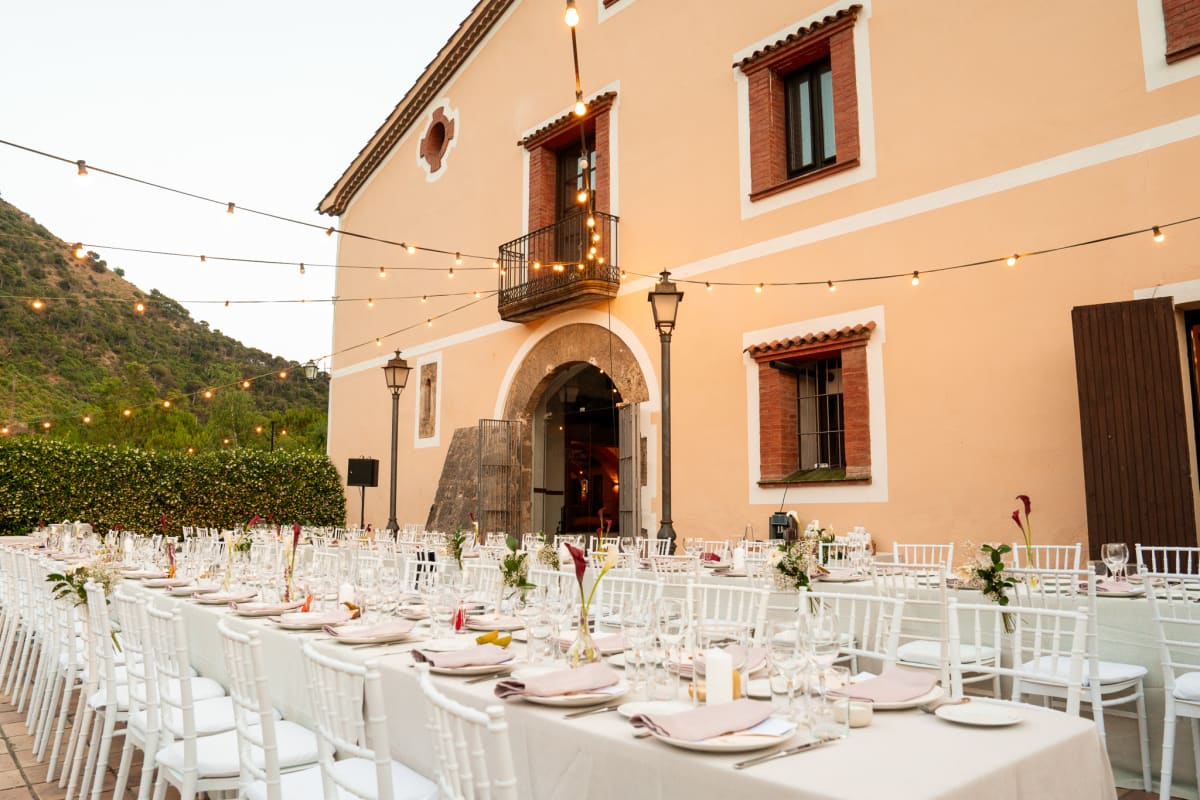
A finca is a country estate. In Catalonia the traditional farmhouse is a masia, and in Andalusia a large estate can be a hacienda. In Mallorca and Menorca, several of our venues are historic estates booked as a whole. Spanish venues on BelleVenue also have the widest price range of the three countries: mainland fincas have some of the lowest starting prices, while exclusive use of an island estate for several nights is at the top of the range.
The legal side: the UK government advises that you or your partner must live in Spain or be a Spanish national to marry there (Foreign, Commonwealth & Development Office, 2025). Many couples from abroad hold a symbolic ceremony.
Best for: couples looking for good value on the mainland, a relaxed outdoor celebration, or an island wedding in the Balearics. Read what a wedding in Spain costs.
Spanish venues to explore
- Masia Font de la ReinaCatalonia
- Hacienda AlfacaraAndalusia
- Son XotanoMallorca
See all wedding venues in Spain.
Which one suits you?
- You want to be legally married on the day, at the destination: Italy is the most practical of the three.
- You want a church wedding in France: the civil marriage must come first, at the town hall.
- You want to choose your own caterer: check each venue’s catering rules before you book, since they vary in all three countries.
- You want everyone under one roof: compare how many guests each venue sleeps. Read how an exclusive-use weekend works.
- Budget comes first: all three countries have venues with low starting prices. See what you get for under €10,000.
Sources
Direction de l’information légale et administrative. (2026). Mariage en France. Service-Public.gouv.fr. https://www.service-public.gouv.fr/particuliers/vosdroits/F930
Consolato Generale d’Italia a New York. (n.d.). Atto notorio for marriages in Italy: US citizens. Ministero degli Affari Esteri e della Cooperazione Internazionale. https://consnewyork.esteri.it/en/servizi-consolari-e-visti/servizi-per-il-cittadino-italiano/servizi-notarili/atto-notorio-for-marriages-to-be-celebrated-in-italy/atto-notorio-for-marriages-in-italy-us-citizens/
Foreign, Commonwealth & Development Office. (2025, February 3). Getting married in Spain. GOV.UK. https://www.gov.uk/guidance/getting-married-in-spain
European Commission. (2026). VAT rules and rates. Your Europe. https://europa.eu/youreurope/business/taxation/vat/vat-rules-rates/index_en.htm